


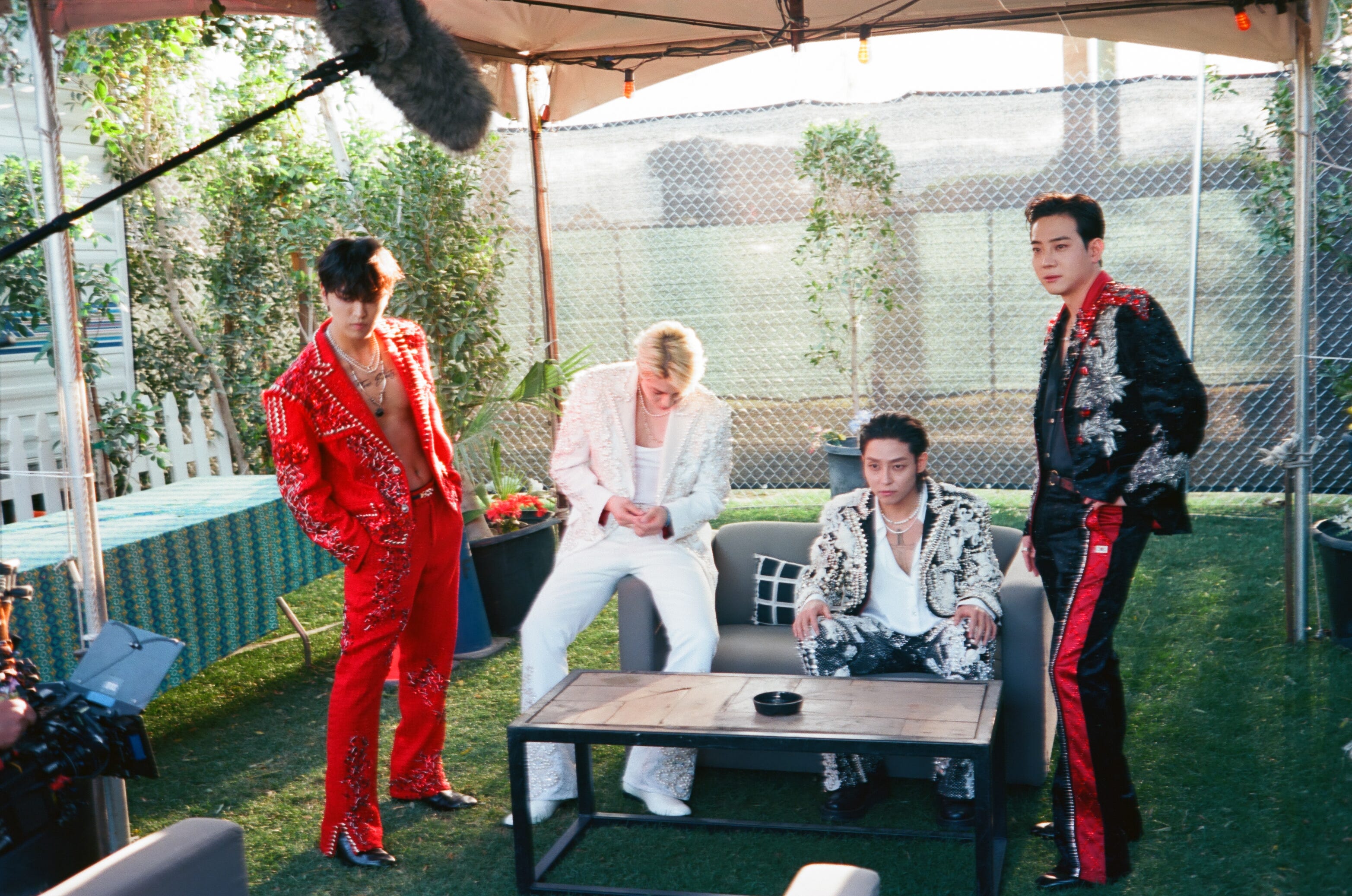
(Photo credit: Richard Hama)
Back in 2023, I saw The Rose take the stage at Lollapalooza. It was one of the band’s biggest performances to date, but also marked a full circle moment for them. After all, it came right exactly at The Rose’s sixth anniversary together, since their debut on August 3, 2017.
“For us to celebrate six years of The Rose with I don’t know how many people, it was very meaningful,” Woosung, the band’s leader, told me weeks later.
“It showed how far The Rose brand and The Rose’s music has come. We’re just happy to be on the journey with our fans.”
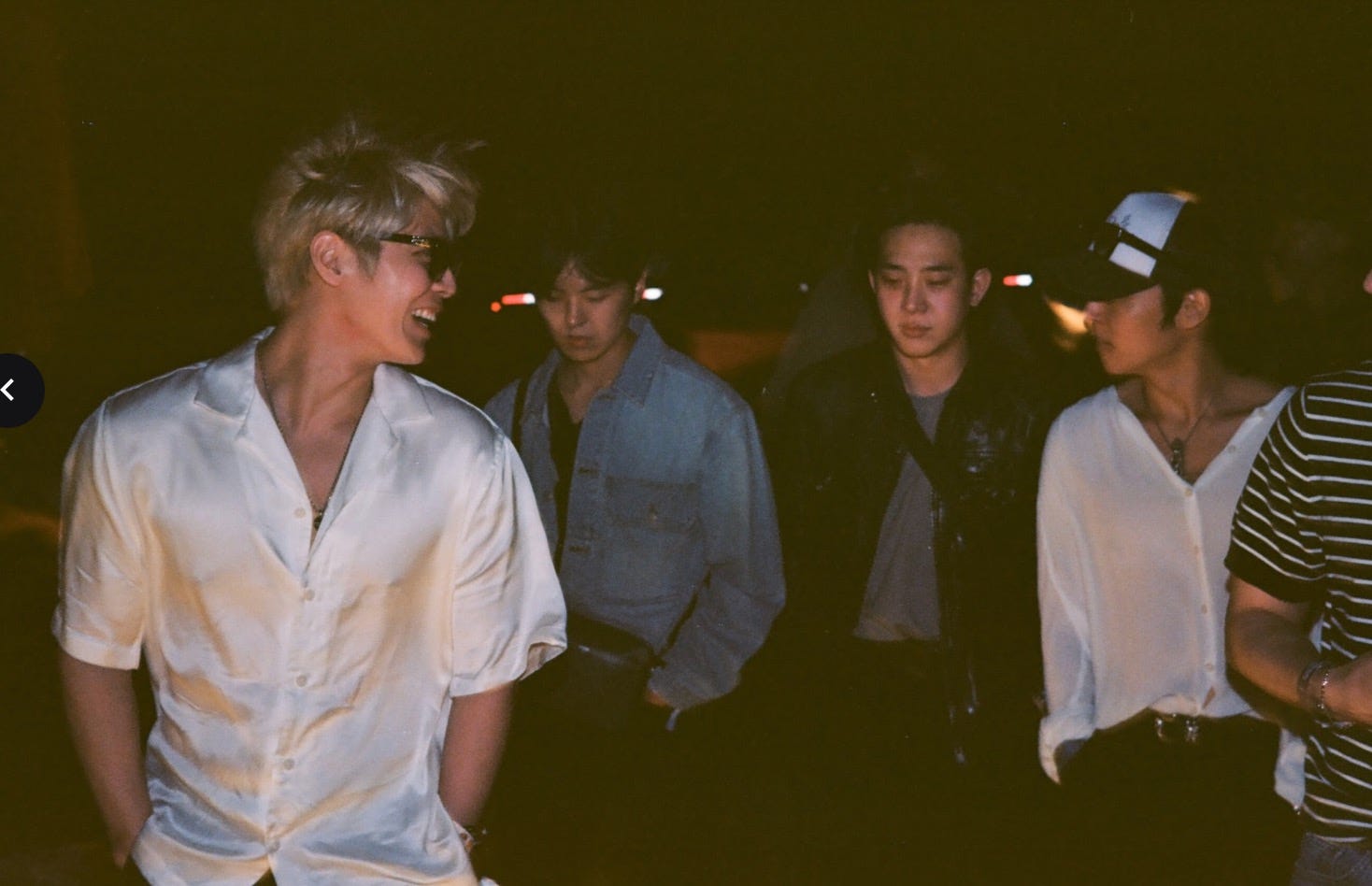
The Rose has humble beginnings as a group. Unlike many Korean groups formed by entertainment companies, members Woosung (Sammy), Dojoon (Leo), Hajoon (Dylan) and Taegyeom (Jeff) found each other. They started off as buskers in the Hongdae neighbourhood of Seoul. Now nearly eight years later they’ve toured around the world, playing festivals including Coachella and BST Hyde Park.
Now The Rose’s story takes centre stage in a new documentary called The Rose: Come Back to Me. The film chronicles the band’s underdog beginnings, friendship and growth in recent years. But it also delves a bit deeper into the challenges the band has faced together, from lawsuit challenges with a former label, internal conflicts and struggles with mental health.
Below is my conversation with the film’s director Eugene Yi and producer Diane Quon. (For consistency, we used The Rose’s English names when referencing the members during our conversation.)
Interview has been condensed for length and clarity.
What drew you to The Rose and their story?
Diane Quon: I was having a meeting with our executive producer Janet Yang about different ideas and she told me about how she just heard of this band called The Rose. James Roh, who is one of the founders of Transparent Arts, had just signed them.
Their background is [The Rose] used to be in the K-pop system, but they all dropped that to pursue music their own way. I’m just kind of a sucker for following your heart and doing it your own way. And when I heard that, it just made me interested in at least meeting with the band to see if they might be interested in doing a documentary. Plus, I wanted to hear the rest of the story.
And when they I met with them, I really saw how willing they were to be vulnerable and to share other parts of their story, including everything from mental health to their experience when they were in a K-pop system.
Eugene Yi: When Diane described the project, I also was not really familiar with The Rose, but I have just always been fascinated by Korean rock music. I grew up in LA, there’s K-pop all around. But every time I hear a rock song, it would just really resonate with me because, one I like rock music, but also it just makes me wonder why there wasn’t more of it.
So to hear about The Rose, I was immediately curious. And then to read about them and learn more about them, I mean they have such an extraordinary story. Like, a real underdog against all odds—from being in the K-pop system, coming out of lawsuits to the military and COVID-19 even. And yet, they were able to stay together, to have core faith in each other and their music.
(Photo credit: Richard Hama)
What was it about their style—music and approach to life— that resonated with you?
Eugene: Their music is great, and it’s just fun to me. As a rock band they pull from many different influences, whether it’s a ballad, pop-punk to EDM. All four of them are really involved.
In terms of their approach to life, I think it’s really their independence and the fact that they’re outside of the [K-pop] system that underscores the freedom they have to make the music they want to make, and the [ability] to talk about what they want to talk about, to be as open as they want to be.
One of the things I find unique about The Rose is the band really straddles between the west and east. Sammy is Korean-American. Leo spent some time in New Zealand, but grew up primarily in South Korea. Jeff and Dylan spent their whole lives in Korea. How have they used that to their advantage to connect with people?
Eugene: I think it also connects to a little bit of what Jeff talked about in the film, in terms of just how K-pop really has created this path for them.
Their first single [“Sorry”] came out right around the time when YouTube algorithms were a major way that people were discovering new music. None of that would be possible without K-pop’s international appeal, of course, but the fact that they’re a rock band, I think, has special salience outside of Korea.
As Jeff mentioned, rock isn’t necessarily a super popular genre in Korea. It’s not the most mainstream genre, but in other countries, it is more popular. So it sort of makes sense that international part of their journey is how they got to where they are today.
Diane: I think the lyrics is also a big reason for why they are so global. When people realize what the words are and the meaning behind them, I think it just resonates so much with folks. I think a lot of bands talk about healing, but there’s something about The Rose that comes from a personal place. No matter what country, it’s a universal message that people seem to relate to.
This documentary doesn’t hide The Rose’s challenging moments, including their experiences in the K-pop system, their lawsuit with their former company, Jeff’s mental health struggles to Sammy getting caught by police for using marijuana. Was that challenging to dig into?
Diane: They were always very open about talking about all those things. Some of it was never where we pushed them or even asked them about. It was often things they would share when they were just talking.
It goes back to how impressed I was by their willingness to be vulnerable. [That] if they’re going to do a documentary, not to make it a puff piece or a promo piece.
One of the most poignant moments of the film is actually when Jeff talks about his time in the military, going through depression and seeking counselling. Why was it so important for him to share that?
Eugene: I think for him to be as candid as he was, reflects his own sort of comfort sharing that story. It’s such a huge part of what’s important to him in terms of the platform he has, the music he makes, what the song “See-Saw” meant. We knew early on that “See-Saw” was going to be in the film because it connects to that theme of healing through music so intimately.
Diane: I think that’s really one of the major reasons why I wanted to make this film. I realized that mental health, that there is a problem not just in Asia, but worldwide.
I think about so many people struggling, especially with social media, and it feels like there’s so much more isolation. And I was thinking that if these young men are willing to talk about it, then I want to make a film that hopefully reaches young people or people of all ages.
It meant a lot to me to make a film that features Asian young men saying it’s okay to talk about your feelings.
(Photo credit: Jaehyeong Lee)
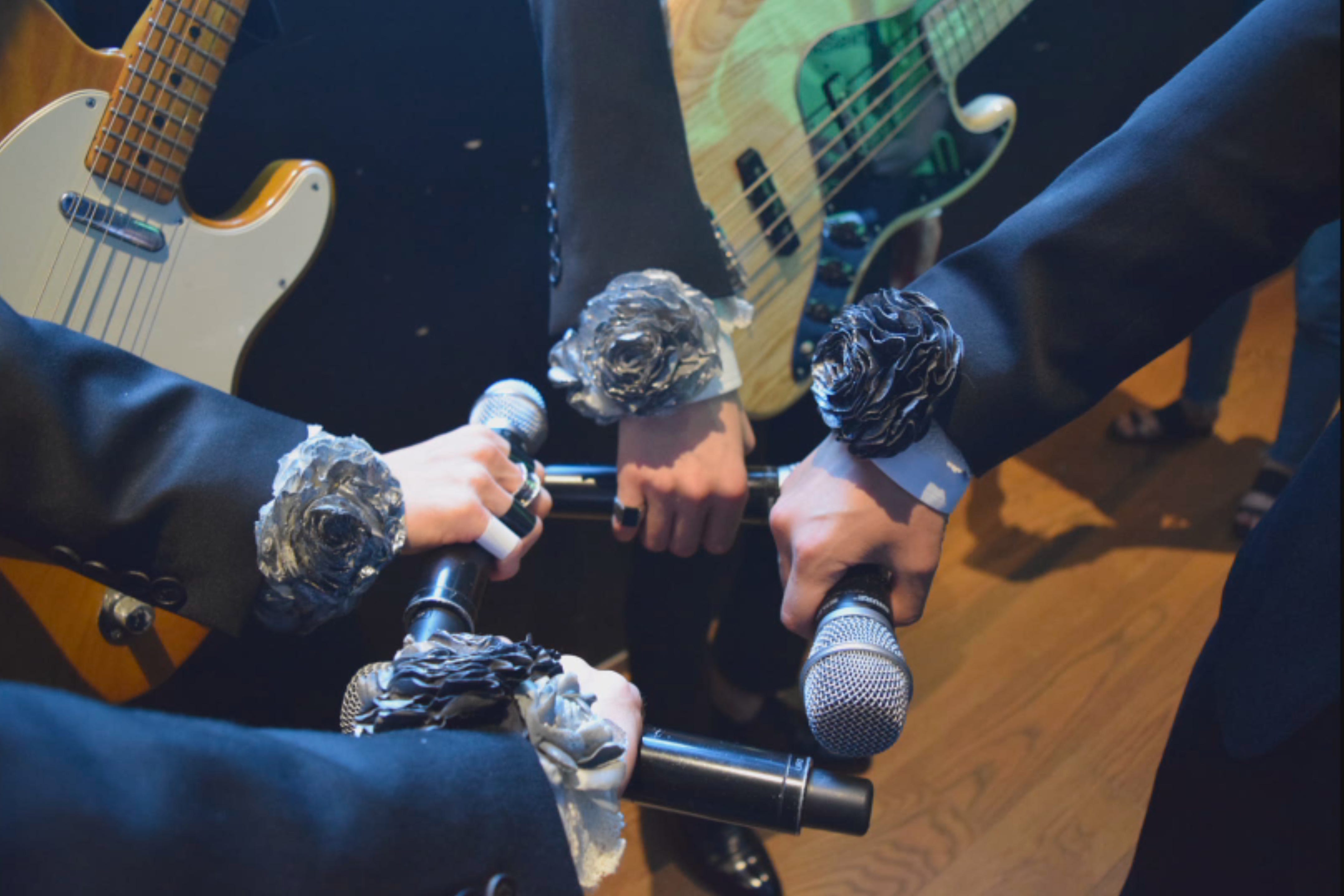
One of the things that also surprised me in the film, was that The Rose talked about how their previous label tried to separate them as a group. And yet, they still chose each other every time. What does that say about their bond?
Diane: It’s a reminder to me that sometimes it’s hard. Whatever relationship, in this case the band, other times it’s family or work. But if you have a passion, or if you have a goal that you’re all agreed on, it’s amazing how you can make it work.
We have been really impressed with how much they believe in the band and their music. They always say, it’s not because we’re great musicians, or we’re any better than anyone else. It’s really they’re just so proud of the music itself, that’s the thing that keeps them together.
Another link you make in the film is The Rose’s connection with another Asian-American trailblazer, Far East Movement. Members of that group now run Transparent Arts, which have signed The Rose. What was it like to have access to both generations of artists?
Eugene: They were the management that helped make this film happen in so many ways.
As an Asian-American, the idea of any kind of intergenerational connection is so precious, so often because of culture, language. So much gets lost between generations. And so to see an example of that within an Asian-American creative context, we all just responded. Who knew that it would involve Far East Movement as well?
It just felt like such an important theme to the film, and the parallels there too. You know, the world might not have been ready for Asian American rappers then, but there’s plenty of K-pop rappers now that everyone just kind of accepts. With The Rose, are people used to seeing a rock band like that?
What do you hope audiences can take away from this film?
Diane: I hope that people come away knowing that they have to do what feels right for them and to follow their heart. I think the other thing that we hadn’t touched on is just the idea that they are wonderful musicians. I hope that when people come to the film, I hope they don’t put Korean music in one box. Often [The Rose] is put in the K-pop box, but I hope that people expand and think, “Wait, it’s just great music!”
Click here for more info on “The Rose: Come Back to Me.” Or visit, therosedoc.com
For more updates, follow bunni pop on Instagram, TikTok and Threads.