


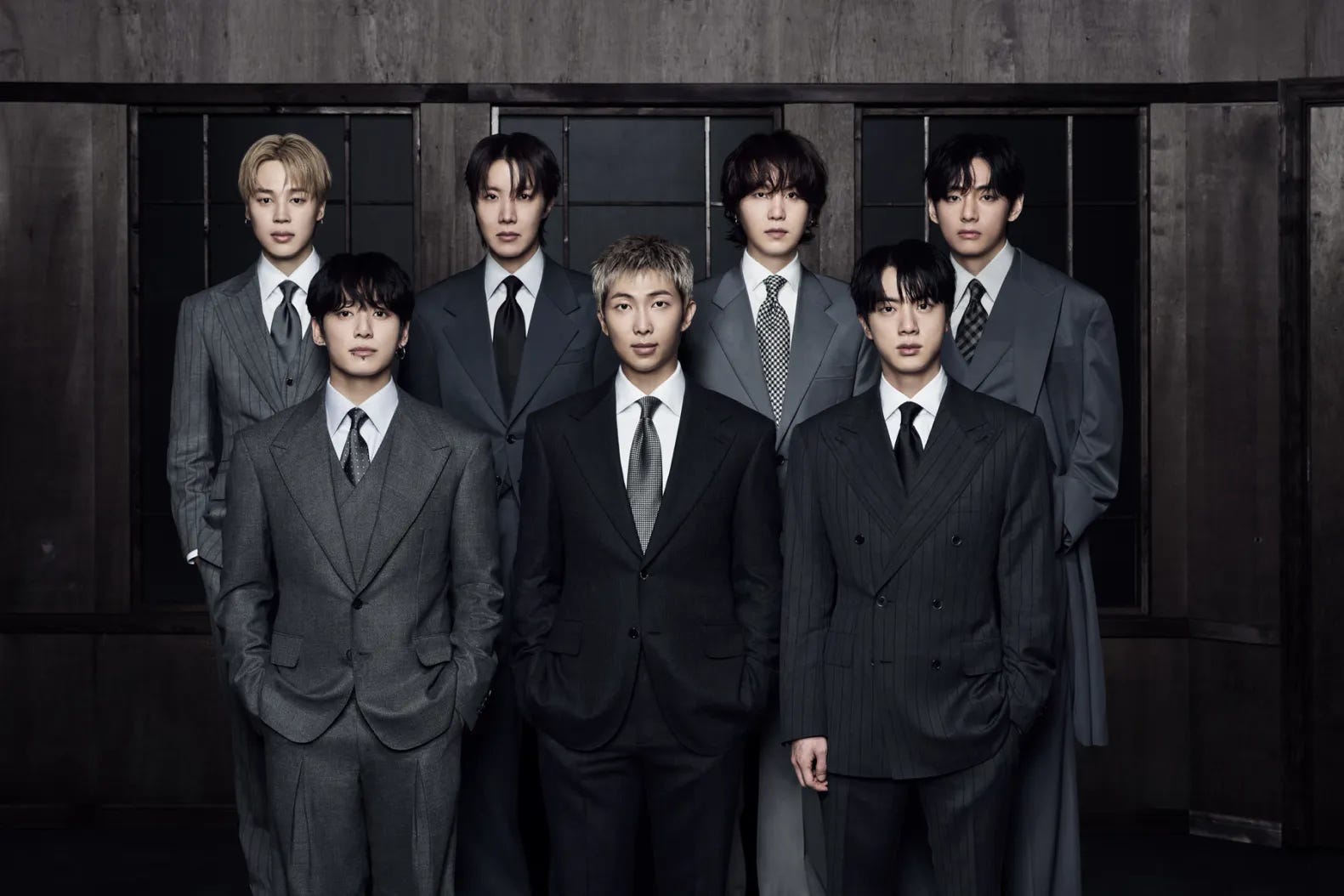
(Photo credit: BIG HIT MUSIC)
I’m not one to stay up late at night. But even I could not help but wait until midnight last Friday to listen to BTS’s first comeback since 2022.
ARIRANG is the K-pop group’s first big release in almost four years. The pressure has been building ever since the BTS members enlisted in the military. And as the days crept closer to March 20th, anticipation was very high.
A name like ARIRANG (named after a UNESCO-recognized Korean folk song that serves as the nation’s unofficial anthem) comes with a lot of weight. For BTS, it’s a signal of paying homage to their Korean roots. But for a band that has reached the highest heights of fame globally, their new era also marks a direction of making music that would equally appeal to a western audience.
K-pop—for lack of a better word—has been in a bit of an identity crisis since BTS went on hiatus as a group in 2022. Even BTS is not immune to this shift in the industry.
I know it sounds dramatic. The optics and facts even suggest this argument is wrong. Internationally, K-pop seems to be everywhere—from the Billboard charts to music festival lineups. Not to mention, a film called KPop Demon Hunters just won two Oscars and a Grammy earlier this year.
But while K-pop seems to be finding mainstream attention overseas, it has been struggling to find resonance back home in South Korea. According to experts who spoke to The Guardian and The Korea Times, the domestic market is “weakening” for K-pop. Album sales, a marker of the industry’s success, are down. Exports of physical albums are also slowing in major markets.
By the time BTS went on hiatus in 2022, this shift around K-pop’s sound was already happening—even for them. The release of its English-language songs “Dynamite” and “Butter” helped catapult them into global fame and earned the group Grammy nominations. But despite the songs’ successes, funnily enough, even Jin admitted a song like “Dynamite” did not resonate with the group at first. “It was never a song that the members favoured,” the BTS singer said on the Netflix variety show Screwballs.
But even as BTS started making music to cater to more international audiences, their absence from the K-pop industry between 2023 to 2025 has been sorely missed.
This period of time marked an influx of comebacks and debuts of new K-pop groups, making the industry both overwhelming and difficult to keep track of. Afrobeats, amapiano and trap—inspired by the likes of Tyla and Travis Scott—started defining newer K-pop songs, making them all sound similar. And while groups like NewJeans helped fill the void with its minimalistic, Y2K sound, that success has since ended prematurely with legal battles and a member getting kicked out of the group.
As for BTS, it was a smart business decision for each of the members to release solo music and space out their military enlistments. The last three years also saw SUGA, j-hope and Jin go on their own respective solo tours. This period marked an exploration of each member figuring out their individual sound. But a question loomed in my head: Could they come back stronger as seven members?
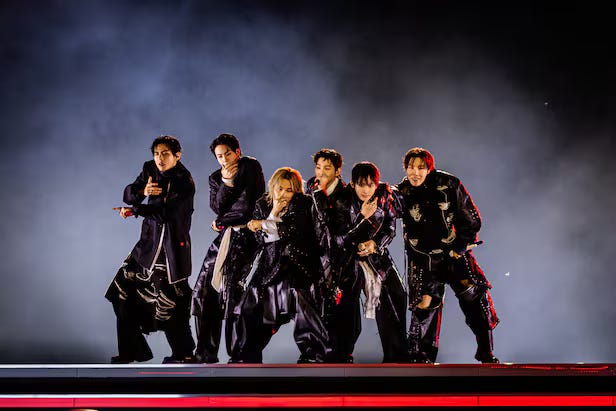
(BTS during their performance in Seoul on Saturday. Photo credit: Netflix)
The release of ARIRANG and BTS’s comeback concert in Seoul this past weekend proved the group has maintained their strength and bond as a cohesive unit. But, it also isn’t lost on me that their latest album is the most western the band has sounded since their debut in 2013.
The album is stacked with producers like Diplo, Ryan Tedder, Mike WILL Made-It and Tame Impala’s Kevin Parker. But despite this, BTS makes room to pay homage to their roots and experiment with different sounds.
The first half of the album feels true to BTS’s earlier hip hop tracks circa 2014’s Dark and Wild. “Hooligan” plays with a string arrangement that blends in with clashing swords. Similar to the band’s “Cypher” tracks, the group is rowdy and braggadocious, showcasing the members’ unapologetic nature. Meanwhile, “Aliens” grapples with BTS’s identity as global superstars, but are still too “Korean” to certain critics and detractors in the west.
The second half is what I would consider more commercially pop, focusing more heavily on the group’s vocal strengths. BTS, a group that has also often sung about mental health, urge fans to move forward through life in the ballad “Swim”. While “Normal” sees the band opening up about the emotional toll of fame.
The most sonically interesting track on ARIRANG though, comes in the opening song “Body to Body.” Set to a thumping dance pop beat, it comes to a climax as an emotional recording of “Arirang” is remixed into the bridge. The message is evident from this—as everyone pays attention to BTS, they too are looking at what Korea has to offer.
While BTS’s ARIRANG will undoubtedly be a commercial hit by nature of BTS’s global stardom, the band’s evolution in sound still has not been met favourably by some.
Some music writers I know have shared openly that they have found the tracks of ARIRANG really difficult to get through as it is “too noisy” and “not the BTS” they have gotten to know through more sentimental eras like Love Yourself (circa 2018). Joshua Minsoo Kim, a reviewer for Pitchfork, also only gave ARIRANG a 5/10 review, describing the project full of “generic songs” that “ring hollow and lack the vim and vigour of the band’s best work.”
BTS themselves have also generated criticism for whitewashing the legacy of Howard University— the oldest historically Black post-secondary institution in the United States—in a trailer promoting the album. The clip, which pays homage to the first known recording of “Arirang” by Korean students at Howard, features predominantly more white faces than Black people. That understandably has upset several people.

 Tiktok failed to load.
Enable 3rd party cookies or use another browser
As a band like BTS reaches the highest levels of fame, it has become clear that they will not satisfy everyone. And that should be expected.
I have always said that your faves should not be immune to constructive criticism. Even BTS should be allowed to evolve and grow. If everyone is satisfied, it’s a sign that they’re doing something wrong.
As for me, ARIRANG is an album I have had to sit with for a while before deciding what I liked and didn’t like about it. Vocally and production-wise, it takes the biggest risks I’ve seen the band take. And it’s evident in songs like “Into the Sun” and “Like Animals”—which veer into more indie rock territory. Meanwhile, a track like “2.0” still feels a bit too repetitive for my liking.
What I will say though is that ARIRANG is the first K-pop album in a while that has really made think about the meaning behind it. So much of K-pop these days is a dizzying array of mini albums and EPs with songs that lack any form of storytelling or substance.
And while the pressure is on for BTS to inject some excitement back into the K-pop sphere, I can honestly say that it thrills me to see people dissecting and interpreting art in a genre that has at times felt more about the streams and the money.
For more updates, follow bunni pop on Instagram, TikTok and Threads.